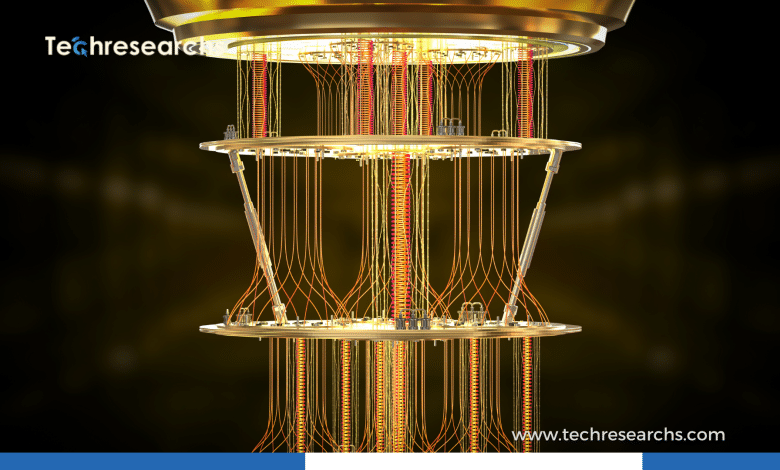
Quantum computing is moving from a highly experimental technology toward a potential business-changing innovation. Unlike classical computers, which process information using bits represented as 0s and 1s, quantum computers use quantum bits, or qubits. This allows them to approach certain complex problems in fundamentally different ways.
Although large-scale, fault-tolerant quantum computing is still developing, researchers and businesses are already exploring how it could transform industries. From healthcare and finance to cybersecurity, logistics, manufacturing, and artificial intelligence, quantum computing could create new opportunities while also introducing new challenges.
What Is Quantum Computing?
Quantum computing uses principles of quantum mechanics, including superposition and entanglement, to process information. A classical bit has a definite value of either 0 or 1, while a qubit can represent a combination of states.
This does not mean quantum computers are simply faster versions of traditional computers. Their main advantage is the ability to approach particular types of complex calculations using quantum algorithms.
Potential applications include optimization, molecular simulation, cryptography, financial modelling, and scientific research.
How Quantum Computing Could Transform Industries
1. Healthcare and Drug Discovery
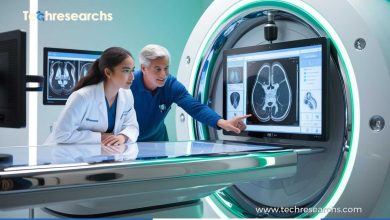
Drug development can require researchers to analyse enormous numbers of molecular interactions. Quantum computers could eventually help simulate molecules and chemical systems more efficiently than conventional approaches for certain problems.
This could support:
- Drug discovery and molecular modelling
- Protein and chemical simulations
- Development of new materials
- Personalised treatment research
- Faster analysis of complex biological systems
Quantum computing is unlikely to replace conventional computing in healthcare. Instead, it could become a specialised tool used alongside high-performance computing and artificial intelligence.
2. Finance and Banking
The financial industry deals with complex calculations involving risk, portfolios, pricing, fraud detection, and market modelling.
Quantum algorithms could potentially improve certain optimisation and simulation problems, helping financial institutions explore large numbers of possible scenarios.
Possible applications include:
- Portfolio optimisation
- Risk analysis
- Financial modelling
- Fraud detection
- Credit-risk assessment
- Trading strategy research
However, practical benefits will depend on the development of reliable quantum hardware and algorithms that provide measurable advantages over classical methods.
3. Cybersecurity
Cybersecurity may be one of the industries most affected by quantum computing.
Some future quantum computers could threaten widely used public-key cryptographic systems. This has encouraged organisations to begin preparing for post-quantum cryptography, which is designed to resist attacks from both classical and quantum computers.
Businesses may need to:
- Identify vulnerable encryption systems
- Inventory cryptographic assets
- Upgrade security infrastructure
- Adopt post-quantum cryptographic standards
- Develop long-term quantum-readiness strategies
Quantum computing therefore represents both a technological opportunity and a cybersecurity challenge.
4. Artificial Intelligence and Machine Learning
Quantum computing and AI could eventually complement one another. Researchers are investigating quantum machine learning techniques that may improve selected optimisation and computational tasks.
Potential areas of interest include:
- Machine-learning optimisation
- Pattern analysis
- Complex data processing
- Model training research
- Optimisation of AI systems
However, quantum AI remains an emerging research field. Classical GPUs, specialised AI accelerators, and conventional machine-learning infrastructure will remain important for most AI workloads for the foreseeable future.
5. Manufacturing
Modern manufacturing involves complex optimisation problems. Companies need to manage production schedules, supply chains, inventory, energy consumption, and resource allocation.
Quantum computing could eventually help solve some of these problems by exploring large combinations of possible solutions.
Potential benefits include:
- Better production scheduling
- Supply-chain optimisation
- Reduced operational costs
- Improved resource allocation
- More efficient factory planning
Quantum optimisation could become especially valuable when businesses need to evaluate many competing constraints simultaneously.
6. Logistics and Transportation
Airlines, shipping companies, delivery services, and transportation networks constantly face routing and scheduling challenges.
Quantum computing could help investigate difficult optimisation problems involving:
- Vehicle routing
- Delivery schedules
- Fleet management
- Traffic optimisation
- Warehouse operations
- Transportation planning
Even small improvements in route planning could produce significant savings for large logistics networks.
7. Energy and Climate Technology
The energy sector could also benefit from quantum simulations and optimisation.
Researchers are exploring how quantum computing could contribute to the development of new materials, batteries, catalysts, and energy systems.
Possible applications include:
- Battery material research
- Renewable-energy optimisation
- Energy-grid management
- Carbon-capture research
- Climate modelling
- New material discovery
These applications could support efforts to build more efficient and sustainable energy technologies.
Quantum Computing and Scientific Research
Scientific research is likely to remain one of the strongest application areas for quantum computing.
Quantum systems could eventually help researchers simulate physical and chemical processes that are difficult to model accurately using classical computers.
This could influence fields such as:
- Chemistry
- Physics
- Materials science
- Biology
- Astronomy
- Environmental science
By improving simulation capabilities, quantum computers could help researchers investigate problems that were previously too computationally demanding.
Challenges to Widespread Adoption
Despite its potential, quantum computing faces major technical and commercial challenges.
Hardware Limitations
Qubits are highly sensitive to environmental disturbances. Maintaining quantum states and reducing errors remains a major engineering challenge.
Error Correction
Quantum systems are prone to errors, and practical large-scale applications will require effective quantum error correction.
High Costs
Building and maintaining quantum computing infrastructure can require specialised hardware, cooling systems, engineering expertise, and research investment.
Limited Quantum Talent
The industry needs professionals who understand quantum physics, computer science, mathematics, software development, and business applications.
Uncertain Timelines
Not every theoretical quantum application will become commercially useful. Businesses must distinguish between promising research and technologies that are ready for real-world deployment.
How Businesses Can Prepare
Companies do not necessarily need to build their own quantum computers today. Instead, they can begin developing quantum readiness.
Businesses can:
- Identify problems that involve complex optimisation or simulation.
- Monitor developments in quantum hardware and algorithms.
- Explore quantum computing through cloud-based platforms.
- Assess how quantum computing could affect cybersecurity.
- Begin planning migration toward post-quantum cryptography.
- Train technical teams in basic quantum computing concepts.
- Partner with universities, research organisations, or technology providers.
Early preparation can help organisations understand where quantum computing may create genuine business value.
What the Future of Quantum Computing Could Look Like
The coming years are likely to focus on improving quantum hardware, reducing errors, developing useful algorithms, and finding practical applications.
Rather than replacing classical computers, quantum computers will most likely work alongside existing computing technologies. Businesses may use classical systems for everyday workloads while sending specialised optimisation, simulation, or cryptographic tasks to quantum systems when they offer an advantage.
The biggest impact may therefore come from hybrid computing, where classical computing, artificial intelligence, high-performance computing, and quantum computing work together.
Conclusion
Quantum computing has the potential to reshape industries by providing new approaches to complex problems that are difficult for conventional computers. Healthcare, finance, cybersecurity, manufacturing, logistics, energy, and scientific research could all be affected as the technology matures.
However, quantum computing is still developing, and its long-term commercial impact remains uncertain. Organisations that focus on realistic use cases, quantum-safe cybersecurity, employee education, and strategic experimentation will be better positioned to take advantage of future breakthroughs.
The quantum era is not simply about building faster computers. It is about discovering new ways to solve problems that matter to businesses, researchers, and society.
Frequently Asked Questions
1. What is quantum computing?
Quantum computing is a type of computing that uses quantum principles such as superposition and entanglement to process information. It is designed to solve certain complex problems differently from traditional computers.
2. How will quantum computing transform industries?
Quantum computing could transform industries by improving complex calculations, simulations, optimisation, drug discovery, financial modelling, logistics, cybersecurity, and materials research.
3. Which industries will benefit most from quantum computing?
Healthcare, finance, cybersecurity, manufacturing, logistics, energy, pharmaceuticals, artificial intelligence, and scientific research are among the industries expected to explore significant quantum applications.
4. Will quantum computers replace traditional computers?
No. Quantum computers are expected to complement rather than replace classical computers. Traditional computers will continue handling everyday computing tasks, while quantum systems may be used for specialised problems.