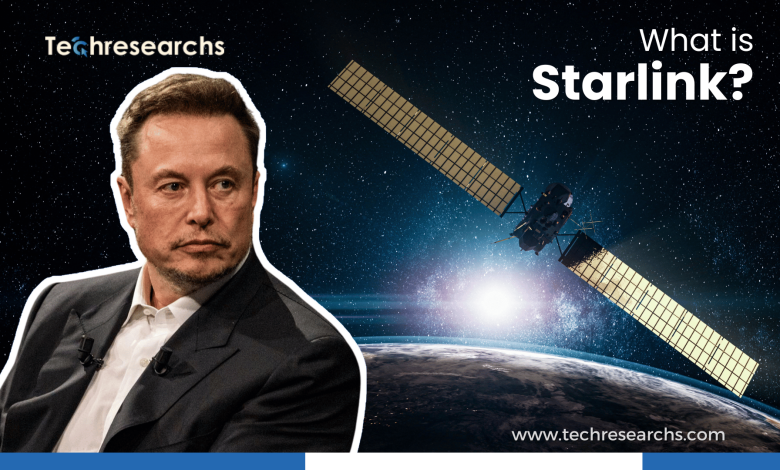
A stable internet connection is easy to take for granted until you live somewhere where broadband infrastructure is limited. Rural communities, remote businesses, ships, aircraft, and isolated locations can face a very different reality when it comes to getting reliable internet access.
This is where satellite internet has become increasingly important.
Starlink, developed by SpaceX, is changing the traditional satellite internet model by using a large network of satellites in low Earth orbit (LEO). Instead of relying on a small number of satellites positioned far above Earth, Starlink uses many satellites that operate much closer to the planet.
The result is a satellite-based network designed to provide broadband connectivity with significantly lower latency than older satellite internet systems.
But Starlink is no longer just about connecting a home to the internet. Its technology is expanding toward mobile connectivity, direct-to-device communication, remote connectivity, transportation, and other applications.
So, how does Starlink actually work, and why is the technology becoming so important?
What Is Starlink?
Starlink is a satellite internet network operated by SpaceX. It uses a large constellation of satellites in low Earth orbit to deliver internet connectivity to users on the ground.
Unlike conventional broadband, Starlink does not require a physical fiber or cable connection between the customer’s home and the wider internet network.
Instead, users install a Starlink terminal that communicates with satellites passing overhead. The satellite network then connects that traffic to internet infrastructure.
Starlink says its network is available across more than 160 countries, territories, and other markets, although availability and service plans vary by location.
How Does Starlink Technology Work?
The basic concept is relatively simple, although the technology behind it is highly sophisticated.
A typical Starlink connection involves several stages:
Device → Wi-Fi router → Starlink terminal → Starlink satellite → satellite/ground network → Internet
Here’s what happens in more detail.
1. Your Device Connects to the Router
Your laptop, smartphone, smart TV, or other device connects to the Starlink Wi-Fi router just as it would with a conventional broadband connection.
2. The Starlink Terminal Communicates With Satellites
The Starlink terminal installed at the user’s location communicates with satellites passing across the sky.
The system is designed to automatically manage the connection as satellites move.
3. Satellites Transfer the Data
The satellite receives data from the user terminal and routes it through the Starlink network.
Modern Starlink satellites also use optical inter-satellite links, commonly called space lasers, allowing satellites to communicate with one another in orbit. Starlink says these links can form a space-based mesh network across the constellation.
4. Data Reaches the Internet
Eventually, the traffic connects with terrestrial internet infrastructure and reaches the requested website, application, video service, or cloud platform.
The same process happens in reverse when information travels back to the user’s device.
Why Does Starlink Use Low Earth Orbit?
The biggest technical difference between Starlink and many older satellite internet systems is orbital altitude.
Traditional geostationary satellites operate approximately 35,786 kilometers above Earth. Starlink satellites operate much closer to the planet.
Starlink’s technology documentation describes its broadband constellation as operating in low Earth orbit, with satellites in several orbital shells. Its current space-safety information also describes newer constellation configurations at lower altitudes.
Why does this matter?
The shorter distance means data does not have to travel as far between the user and satellite. This can significantly reduce latency.
Starlink currently states typical land latency of around 25–60 milliseconds, although actual performance varies by location and network conditions.
That makes satellite connectivity much more practical for activities that require quick responses.
The Technology Behind Starlink
Starlink is not simply a collection of internet satellites. It combines several technologies to create a large communications network in space.
Low Earth Orbit Satellites
The satellites operate much closer to Earth than conventional geostationary communications satellites.
This helps reduce latency while allowing the network to provide broad geographic coverage.
Phased-Array Antennas
Starlink satellites use advanced antenna systems to communicate with terminals and manage high-bandwidth connections.
These antennas allow the system to electronically steer communication without relying on the same mechanical movement associated with traditional satellite dishes.
Optical Inter-Satellite Links
One of Starlink’s more interesting technologies is its use of optical communication between satellites.
Instead of sending every connection immediately down to a ground station, satellites can transfer data between one another using laser links.
This can help create flexible routes through the satellite constellation.
Ion Propulsion
Starlink satellites use electric propulsion systems for orbital maneuvering and end-of-life operations. Starlink’s current technology information identifies argon-based ion propulsion as part of its satellite platform.
This technology helps satellites adjust their position and eventually leave orbit when they reach the end of their operational life.
What Speeds Can Starlink Provide?
Starlink performance depends on several factors, including location, network congestion, service plan, and time of day.
Its current specifications indicate typical download speeds of approximately 45–280 Mbps, upload speeds of around 10–30 Mbps, and typical land latency of 25–60 ms. These are performance ranges rather than guaranteed speeds.
Starlink also advertises speeds of up to 400+ Mbps in many locations.
For everyday users, this can be sufficient for activities such as:
- HD and 4K video streaming
- Video conferencing
- Remote work
- Cloud applications
- Web browsing
- Online gaming
- File transfers
- Multiple connected devices
Actual results can differ considerably from one location to another.
What Makes Starlink Different From Traditional Satellite Internet?
Older satellite internet systems typically relied on geostationary satellites located extremely far from Earth.
Starlink takes a different approach.
| Feature | Traditional Satellite Internet | Starlink |
|---|---|---|
| Satellite orbit | Mainly geostationary | Low Earth orbit |
| Number of satellites | Relatively small | Large constellation |
| Typical latency | Higher | Lower |
| Coverage | Broad | Broad and expanding |
| User equipment | Satellite terminal | Starlink terminal |
| Satellite-to-satellite links | Limited or uncommon | Optical links are part of the network |
| Best use case | Basic satellite connectivity | Broadband and lower-latency connectivity |
This does not mean Starlink is automatically better for everyone. Fiber broadband can still provide lower latency and excellent capacity where it is available.
Starlink’s biggest advantage is the ability to provide connectivity without requiring a traditional last-mile cable connection.
Starlink for Rural and Remote Areas
One of Starlink’s most important applications is connecting places where conventional broadband infrastructure is difficult to deploy.
Building fiber networks across mountains, deserts, islands, forests, and sparsely populated regions can be expensive and time-consuming.
Satellite connectivity approaches the problem differently.
Instead of bringing a cable to every remote location, the connection can be delivered from space.
This can be useful for:
- Rural households
- Farms
- Remote offices
- Construction sites
- Research stations
- Emergency response teams
- Ships and maritime operations
- Remote tourism locations
For communities that previously had very limited internet options, this can make a meaningful difference.
Starlink Is Moving Beyond Home Internet
Perhaps the most interesting development is that Starlink is increasingly becoming more than a fixed-location broadband service.
SpaceX has been developing Direct-to-Cell and direct-to-device capabilities that aim to extend connectivity to compatible mobile devices through satellite networks.
This could help provide communication in areas where conventional cellular towers are unavailable.
Recent developments are particularly relevant to India. On August 20, 2026, Reuters reported that Starlink had reapplied for Indian regulatory approval for its satellite network, including direct-to-device connectivity, although the details were attributed to a report and had not been independently verified by Reuters.
If regulatory and technical requirements are met, satellite-to-device connectivity could become an important part of the next generation of mobile communications.
Starlink and Emergency Connectivity
Natural disasters can damage terrestrial communication infrastructure.
Floods, earthquakes, storms, wildfires, and other emergencies can disrupt power, cellular networks, and physical communication lines.
Satellite connectivity offers an alternative because the connection does not depend entirely on local terrestrial infrastructure.
This makes systems such as Starlink potentially useful for emergency teams and organizations that need to restore communication quickly.
However, satellite equipment still requires power and a suitable operating environment, so it should be viewed as a useful connectivity option rather than a solution that eliminates every communications challenge.
What Are the Limitations of Starlink?
Despite its advantages, Starlink is not perfect.
Weather Can Affect Performance
Heavy rain and severe weather can interfere with satellite communications. Starlink equipment is designed to operate in challenging weather conditions, but no wireless communication system is completely immune to environmental effects.
A Clear View of the Sky Is Important
Trees, buildings, and other obstacles can interrupt the terminal’s view of the satellites.
Installation therefore requires careful consideration of the surrounding environment.
Performance Can Vary
Starlink’s published speeds are not guaranteed. Network congestion, location, service plan, and other factors can influence actual performance.
Cost Can Be a Barrier
Users generally need both Starlink hardware and a service subscription. Pricing varies by country, service type, and location.
Space Sustainability Remains Important
Large satellite constellations also raise questions about orbital congestion, astronomy, radio-frequency interference, and space debris.
Starlink has been working on orbital and deorbiting strategies, including lowering some satellite shells to reduce the time satellites could remain in orbit if they lose the ability to maneuver.
These issues will remain important as the satellite internet industry expands.
Starlink’s Role in the Future of Internet Connectivity
The future of internet connectivity is unlikely to depend on one technology alone.
Fiber, 5G, fixed wireless, Wi-Fi, and satellite networks will continue to serve different needs.
Starlink’s role could be especially important in connecting locations where terrestrial infrastructure cannot easily reach.
Its future could also extend into areas such as:
- Direct-to-device mobile connectivity
- Maritime communications
- Aviation connectivity
- Remote industrial operations
- Disaster response
- Internet of Things applications
- Rural broadband
- Government and emergency communications
The combination of satellite broadband and direct-to-device services could gradually blur the line between satellite and terrestrial communications.
Starlink’s Growing Importance in 2026
Starlink’s development in 2026 shows how quickly satellite connectivity is evolving.
The technology is moving from the idea of simply providing internet from space toward building a broader communications infrastructure that can connect homes, businesses, vehicles, and potentially ordinary mobile devices.
At the same time, competition is increasing as other companies develop their own low Earth orbit satellite networks.
This competition could eventually lead to better technology, wider coverage, and more choices for consumers.
Is Starlink the Future of Satellite Internet?
Starlink is certainly one of the most significant developments in modern satellite communications, but calling it the complete replacement for traditional broadband would be an exaggeration.
Fiber remains extremely capable where it is available. Cellular networks continue to improve. Fixed wireless access is expanding as well.
Starlink’s real strength is different: it can bring broadband connectivity to locations where building traditional infrastructure is difficult.
That makes the technology particularly valuable as global demand for reliable internet continues to grow.
Final Thoughts
Starlink has changed the way people think about satellite internet.
Instead of accepting the high latency traditionally associated with satellite connections, SpaceX has built a large low Earth orbit network designed to deliver faster and more responsive broadband connectivity.
Its use of phased-array antennas, optical inter-satellite links, advanced satellites, and electric propulsion demonstrates how modern space technology is becoming part of everyday communications.
And the story is still developing.
As Starlink expands into direct-to-device connectivity and new markets, satellite networks could become an increasingly important layer of the global communications infrastructure.
For people living in remote locations, businesses operating far from cities, and industries that depend on connectivity in difficult environments, that future may already be arriving.
Frequently Asked Questions
What is Starlink technology?
Starlink technology is a satellite internet system developed by SpaceX that uses low Earth orbit satellites to provide broadband connectivity, particularly in areas where traditional internet infrastructure may be limited.
How does Starlink provide internet access?
Starlink uses a user terminal to communicate with satellites passing overhead. The satellites transfer data through the Starlink network and connect users to internet infrastructure on the ground.
Is Starlink better than traditional broadband?
Starlink can be a strong option for rural and remote locations where fiber or cable broadband is unavailable. However, fiber can still offer lower latency and higher performance where reliable terrestrial infrastructure is available.
What is the future of Starlink?
Starlink is expanding beyond traditional satellite broadband, with developments involving direct-to-device connectivity, mobility, aviation, maritime communications, and other applications that could make satellite connectivity more widely accessible.