How Artificial Intelligence Is Redefining Automotive Technology

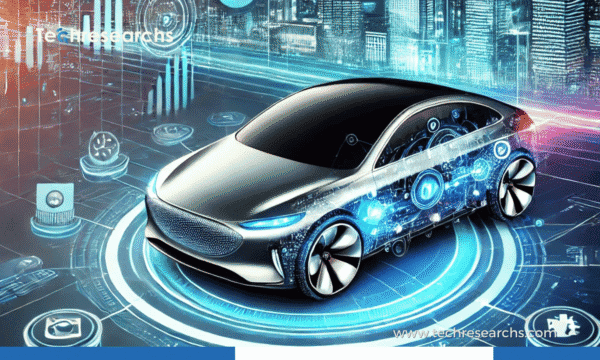
The automotive industry is going through a major transformation. Cars are no longer defined only by engine performance, fuel efficiency, or design. Increasingly, the real difference comes from software, sensors, connectivity, and artificial intelligence (AI).
In 2026, AI is moving deeper into the vehicle itself. It is helping cars understand their surroundings, assist drivers, personalize the cabin experience, improve electric-vehicle performance, and support increasingly sophisticated automated-driving systems. Recent developments are also pushing the industry from software-defined vehicles toward AI-defined vehicles, where machine-learning systems play a larger role in how vehicles interpret data and respond to changing situations.
This evolution is changing not only how cars are driven but also how they are designed, developed, updated, and maintained.
What Is the Role of AI in Automotive Technology?
AI allows vehicles to process large amounts of information and make useful predictions or decisions from that data.
Modern vehicles can collect information from cameras, radar, lidar, GPS, vehicle sensors, and connected services. AI systems can then analyze this information in real time.
For example, AI can help a vehicle:
- Detect vehicles, pedestrians, and road objects
- Recognize traffic conditions
- Assist with lane positioning
- Predict potential driving risks
- Optimize battery performance
- Personalize infotainment and climate settings
- Identify possible vehicle faults
- Improve navigation and route planning
The important change is that AI is becoming part of the vehicle’s underlying intelligence rather than simply being an optional feature.
AI Is Transforming Advanced Driver Assistance
Advanced Driver Assistance Systems (ADAS) are among the most visible applications of AI in modern vehicles.
Features such as adaptive cruise control, lane-centering assistance, automatic emergency braking, blind-spot monitoring, and traffic-sign recognition depend on sensors and sophisticated software.
AI helps these systems interpret information instead of simply reacting to one sensor at a time. A vehicle can combine multiple sources of information to build a better understanding of what is happening around it.
The industry is also continuing to develop regulations around automated driving and driver-assistance technologies. In June 2026, UNECE’s WP.29 adopted a UN Global Technical Regulation and draft UN Regulation concerning Automated Driving Systems, highlighting the growing importance of safety and regulatory frameworks alongside technological progress.
Autonomous Driving Is Becoming More AI-Driven
Autonomous driving remains one of the most ambitious applications of automotive AI.
Instead of following only predefined instructions, autonomous-driving systems need to understand complex and unpredictable environments. They must recognize objects, estimate movement, interpret road conditions, plan trajectories, and respond quickly.
AI models can support these tasks by learning patterns from enormous amounts of driving data.
One important development is the growing interest in end-to-end driving models, where AI can connect perception and driving decisions more directly. Research in 2026 continues to explore how human attention and multimodal sensor information can improve the reliability and explainability of these systems.
However, autonomous driving is not simply an AI problem. Reliable sensors, powerful onboard computing, mapping, cybersecurity, testing, regulation, and human-machine interaction all have to work together.
AI Is Creating Smarter In-Car Assistants
The traditional voice assistant in a car usually understands a limited collection of commands.
AI is changing that experience.
Newer automotive assistants are becoming more conversational and context-aware. Instead of saying a precise command such as “set temperature to 22 degrees,” drivers may increasingly be able to communicate naturally and let the system determine which vehicle functions need to be changed.
For example, an AI assistant could potentially handle requests involving:
- Navigation
- Climate control
- Entertainment
- Vehicle settings
- Phone functions
- Charging information
- Vehicle manuals
This trend is already appearing in production vehicles. In August 2026, Mahindra announced an AI-powered conversational assistant for its BE 6 SPORTEQ that can control more than 200 vehicle functions.
The result is a vehicle that feels less like a machine with buttons and more like an intelligent digital environment.
AI Is Changing Electric Vehicle Management
Artificial intelligence is also becoming important for electric vehicles (EVs).
An EV continuously generates information about battery temperature, charging behavior, energy consumption, driving conditions, and vehicle performance. AI can analyze this information to help optimize energy usage.
Potential applications include:
- Predicting battery behavior
- Improving charging strategies
- Estimating driving range
- Optimizing energy consumption
- Detecting unusual battery behavior
- Improving thermal management
- Personalizing energy-saving recommendations
This can make EV ownership more predictable and efficient.
As EV manufacturers compete on range and charging performance, intelligent energy management is likely to become an increasingly important part of the overall vehicle experience.
Predictive Maintenance Can Reduce Unexpected Problems
Traditional vehicle maintenance often follows a fixed schedule.
AI introduces a more data-driven approach.
Connected vehicles can continuously monitor information from different components. Machine-learning models can identify patterns that may indicate abnormal behavior before a component fails completely.
For example, AI-supported predictive maintenance could help identify unusual patterns associated with:
- Battery systems
- Braking components
- Powertrains
- Motors
- Thermal systems
- Sensors
- Electrical components
Instead of waiting for a warning light or breakdown, manufacturers and service providers can potentially use vehicle data to identify problems earlier.
AI Is Making Vehicles More Personalized
Every driver has different habits.
Some prefer a cooler cabin, others prefer a particular driving mode, navigation style, or entertainment setup. AI can learn these preferences and help create a more personalized experience.
A future vehicle could recognize patterns such as preferred:
- Seat and mirror settings
- Climate preferences
- Navigation destinations
- Charging routines
- Entertainment choices
- Driving modes
This creates a shift from one vehicle configuration for everyone toward a more adaptive experience.
AI and Software-Defined Vehicles Are Converging
The modern vehicle is increasingly becoming a software platform.
Software-defined vehicles allow manufacturers to add or improve features through software updates rather than relying entirely on physical changes. AI takes this concept further by enabling systems to interpret data and adapt their behavior.
This is one reason the industry is increasingly discussing AI-defined vehicles. Recent automotive technology discussions describe the transition as moving beyond software-defined architectures toward vehicles where AI increasingly influences perception, personalization, navigation, and other functions.
Over-the-air updates can also become important because manufacturers can improve software after a vehicle has already reached customers.
AI Is Changing Automotive Manufacturing
AI is not limited to the vehicle itself.
Automakers are using AI throughout manufacturing and development processes.
AI can support:
- Quality inspection
- Production planning
- Robotics
- Supply-chain forecasting
- Factory maintenance
- Design optimization
- Testing and simulation
Computer-vision systems, for instance, can inspect components for defects at high speed. Predictive systems can also help manufacturers identify production problems before they become expensive disruptions.
This means AI is influencing the entire automotive lifecycle—from designing a vehicle to manufacturing it and eventually servicing it.
Automotive Cybersecurity Is Becoming More Important
More intelligence and connectivity also introduce new risks.
A connected vehicle can communicate with mobile applications, cloud platforms, charging infrastructure, navigation services, and other systems. As the number of digital connections increases, cybersecurity becomes a critical part of automotive engineering.
AI can help detect unusual network behavior and identify potential security threats. At the same time, manufacturers must ensure that AI systems themselves cannot become new attack surfaces.
Regulatory work is evolving alongside these challenges. UNECE continues to work on automotive cybersecurity and software-update requirements, including proposals related to UN Regulations 155 and 156 in 2026.
For automakers, intelligent vehicles must therefore be smart, connected, and secure.
What Are the Biggest Challenges for Automotive AI?
Despite its potential, AI-powered automotive technology still has significant challenges.
Safety and Reliability
A vehicle operates in a physical environment where mistakes can have serious consequences. AI systems therefore need extensive testing and validation.
Data Quality
AI models depend on high-quality data. Poor, incomplete, or biased data can affect system performance.
Explainability
It can be difficult to understand why a complex AI model made a particular prediction or decision. This becomes especially important for safety-critical automotive applications.
Computing Requirements
Real-time AI applications require powerful computing hardware while also meeting strict limits on energy consumption, heat, cost, and physical space.
Cybersecurity
Connected and AI-powered vehicles require strong protection against unauthorized access, manipulation, and data-related threats.
Regulation
Automotive AI must operate within safety and regulatory frameworks that continue to evolve as technology develops.
The Future of AI in Automotive Technology
The next stage of automotive innovation will likely involve deeper integration between AI, sensors, cloud computing, edge computing, electric powertrains, and vehicle software.
The biggest shift may be that AI becomes less visible as a standalone feature and more deeply embedded into the overall vehicle architecture.
Instead of thinking about “an AI feature,” manufacturers may increasingly design vehicles around intelligent systems that work across multiple functions.
Future vehicles could become better at understanding context, anticipating driver needs, optimizing energy use, and continuously improving through software.
But the goal should not simply be to make cars more autonomous or futuristic. The real goal is to make them safer, more useful, more efficient, and easier to interact with.
Conclusion
Artificial intelligence is redefining automotive technology from the inside out.
It is improving driver assistance, supporting autonomous-driving research, powering conversational assistants, optimizing EV systems, enabling predictive maintenance, personalizing vehicle experiences, and transforming automotive manufacturing.
The automotive industry is moving toward a future where software and AI are just as important as mechanical engineering. Recent developments in automated-driving regulation, AI-powered in-car assistants, and AI-defined vehicle architectures show that this transition is already underway.
The cars of the future will not simply be machines that take people from one place to another. They will increasingly act as intelligent platforms that can understand their surroundings, learn from data, communicate naturally, and adapt to the people using them.
That is what makes AI one of the most important technologies shaping the next generation of automotive innovation.
Frequently Asked Questions
How is AI used in cars?
AI helps cars analyze sensor data, support driver assistance, improve navigation, and personalize vehicle functions.
Can AI improve EV performance?
Yes. AI can analyze battery and driving data to improve energy usage, charging strategies, and range estimation.
How does AI support autonomous driving?
AI processes data from cameras, radar, lidar, and other sensors to recognize objects and support driving decisions.
Is AI important for automotive cybersecurity?
Yes. AI can help detect unusual behavior and potential threats in connected vehicle systems and networks.