5G technology is becoming more than just a faster mobile network. In 2026, businesses are increasingly using 5G as a foundation for connected operations, artificial intelligence, automation, Internet of Things (IoT) applications, edge computing, and flexible enterprise networking.
Unlike previous generations of mobile connectivity, 5G can support large numbers of connected devices, high-bandwidth applications, and latency-sensitive workloads. This makes it particularly valuable for industries where real-time communication and reliable connectivity are essential.
From smart factories and logistics to healthcare, retail, finance, and remote work, 5G is changing how organizations connect people, machines, applications, and data.
What Is 5G and Why Does It Matter for Businesses?
5G is the fifth generation of cellular network technology. It is designed to provide higher network capacity, faster data transmission, improved reliability, and lower latency than earlier generations.
For businesses, however, the importance of 5G is not simply about faster downloads.
Its greater value comes from its ability to support technologies such as:
- Internet of Things (IoT)
- Artificial intelligence (AI)
- Edge computing
- Cloud applications
- Connected machines
- Autonomous systems
- Augmented and virtual reality
- Smart logistics
- Remote operations
- Private enterprise networks
The GSMA describes 5G as an important enabler for AI, cloud computing, edge computing, and IoT because increased network capacity can help organizations manage the growing amount of data produced by connected devices.
1. Faster and More Reliable Business Connectivity
One of the most immediate effects of 5G will be improved connectivity.
Businesses increasingly depend on cloud applications, video conferencing, SaaS platforms, connected devices, and real-time collaboration. Poor connectivity can slow operations and reduce employee productivity.
5G can provide businesses with another high-performance connectivity option, particularly for locations where installing or expanding wired infrastructure is difficult.
This can be useful for:
- Branch offices
- Construction sites
- Warehouses
- Retail locations
- Temporary facilities
- Transportation fleets
- Remote work environments
- Industrial facilities
Enterprise wireless strategies are increasingly treating 5G as part of the core networking infrastructure rather than simply as a backup connection.
2. Growth of Private 5G Networks
Private 5G networks are expected to become increasingly important for organizations that require greater control over connectivity.
A private 5G network is designed for a specific organization or location. It can provide controlled coverage, performance, device access, and network policies.
This is especially relevant for environments such as:
- Manufacturing plants
- Airports
- Hospitals
- Ports
- Warehouses
- Mining operations
- Large campuses
- Research facilities
Private 5G can offer consistent connectivity and mobility for business-critical devices and applications. It can also support use cases such as industrial robots, autonomous vehicles, remote control, and real-time video monitoring.
In 2026, organizations are moving beyond simple experiments and looking more closely at how private 5G can deliver measurable business value at scale.
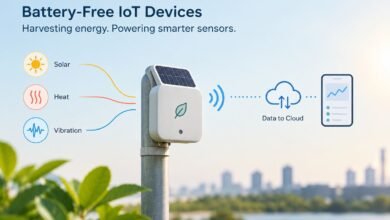
3. 5G Will Accelerate the Internet of Things
The number of connected devices used by businesses continues to grow.
Sensors, cameras, machines, vehicles, tracking systems, smart equipment, and industrial devices can generate enormous amounts of data.
5G can help organizations connect and manage these devices more effectively.
For example, a logistics company could use connected sensors to monitor vehicle locations and cargo conditions. A manufacturer could monitor machinery in real time. A retailer could connect smart shelves and inventory systems.
This can help businesses gain better visibility into their operations and make decisions using real-time information.
4. AI and 5G Will Work Together
Artificial intelligence is another major area where 5G can have an impact.
AI applications often depend on large amounts of data. Connected cameras, sensors, machines, and mobile devices can continuously generate information that needs to be transmitted and processed.
5G can provide the connectivity needed to move this data quickly, while edge computing can process important workloads closer to where the data is generated.
This combination can support applications such as:
- AI-powered video analysis
- Predictive maintenance
- Intelligent robotics
- Real-time quality inspection
- Smart transportation
- Worker safety systems
- Connected customer experiences
Current enterprise discussions around AI and 5G increasingly focus on the network as a foundation for real-world AI applications rather than simply treating connectivity as an infrastructure layer.
5. Edge Computing Will Become More Valuable
Cloud computing has transformed business IT, but sending every piece of data to a distant cloud data center is not always ideal for applications requiring immediate responses.
Edge computing addresses this challenge by processing data closer to where it is generated.
When 5G and edge computing are combined, businesses can build applications that require rapid communication and decision-making.
For example, a smart factory could use cameras and sensors to detect production problems. Data could be analyzed near the factory rather than sending every piece of information to a remote data center.
This can reduce latency, limit unnecessary data transfer, and support real-time applications.
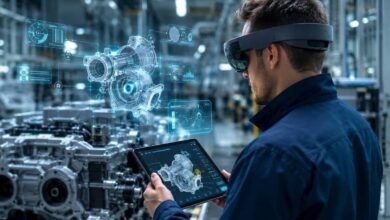
6. Smart Manufacturing Will Expand
Manufacturing is likely to remain one of the strongest business applications for 5G.
Modern factories are becoming increasingly automated. Robots, sensors, cameras, autonomous vehicles, and AI systems need reliable communication to operate effectively.
5G can help connect these systems across large industrial environments.
Businesses can use it for:
- Robotic automation
- Machine monitoring
- Predictive maintenance
- Automated guided vehicles
- Digital twins
- AI-powered inspection
- Worker safety
- Real-time production monitoring
In 2026, demonstrations and enterprise initiatives are increasingly combining private 5G, edge computing, and AI to create more flexible manufacturing environments.
7. Better Remote and Hybrid Work
Remote and hybrid work have changed the requirements for business connectivity.
Employees may work from homes, coworking spaces, branch offices, customer locations, or while traveling.
5G can provide high-performance wireless access for employees and business devices when traditional wired connectivity or Wi-Fi is unavailable or unreliable.
Businesses can potentially use 5G to support:
- Video meetings
- Cloud applications
- Remote collaboration
- Mobile workforces
- Secure enterprise access
- Connected office equipment
This can give companies greater flexibility when designing their workplace and networking strategies.
8. Transformation of Logistics and Transportation
The transportation and logistics sector can also benefit from 5G.
Modern logistics depends heavily on real-time information. Companies need to know where vehicles are, what inventory is available, and whether shipments are moving efficiently.
5G-connected systems can support:
- Fleet tracking
- Smart warehouses
- Connected vehicles
- Automated equipment
- Real-time inventory monitoring
- Route optimization
- Remote vehicle diagnostics
Combining 5G with AI and IoT can help logistics companies turn large volumes of operational data into faster decisions.
9. New Opportunities for Retail Businesses
Retailers are also exploring connected technologies to improve customer experiences and store operations.
5G can support applications such as:
- Smart shelves
- Real-time inventory tracking
- Connected payment systems
- Augmented reality shopping
- AI-powered cameras
- Personalized digital experiences
- Connected point-of-sale systems
For example, a retailer could use connected sensors to monitor inventory levels automatically and notify staff when products need to be replenished.
The result can be a more responsive and data-driven retail environment.
10. Healthcare Can Benefit From Connected Technologies
Healthcare organizations increasingly rely on connected devices, digital systems, remote monitoring, and data-intensive applications.
5G can support communication between medical devices and systems where reliable, high-performance connectivity is required.
Potential applications include:
- Remote patient monitoring
- Connected medical equipment
- Telemedicine
- Smart hospitals
- Real-time medical data transmission
- Augmented reality for training
- Connected emergency services
However, healthcare organizations must carefully evaluate security, privacy, compliance, reliability, and deployment costs before implementing these technologies.
11. Network Slicing Can Support Different Business Requirements
Another important 5G capability is network slicing.
Network slicing allows network resources to be logically separated to support different performance or service requirements.
For example, a business might require one type of connectivity for standard employee devices and another for mission-critical industrial equipment.
Private 5G and network slicing are complementary approaches rather than identical solutions. The appropriate choice depends on the organization’s requirements for coverage, control, priority, and service performance.
12. 5G Can Improve Business Agility
Traditional infrastructure can sometimes take significant time to deploy, particularly when businesses need connectivity at new locations.
Wireless connectivity can provide greater flexibility.
Companies opening temporary sites, expanding branches, deploying remote equipment, or connecting mobile operations may be able to establish connectivity more quickly than with some traditional approaches.
This can be especially useful for organizations with distributed operations.
13. Security Will Become Even More Important
The benefits of 5G also come with new security responsibilities.
As businesses connect more devices, machines, sensors, and applications, their attack surface can increase.
Organizations should consider:
- Device authentication
- Network access controls
- Encryption
- Zero-trust security
- IoT security
- Endpoint protection
- Data governance
- Network monitoring
- Software updates
Private 5G can provide organizations with greater control over network environments, but it does not automatically eliminate cybersecurity risks.
Security should therefore be included from the beginning of any enterprise 5G deployment.
14. 5G Will Create New Business Models
Perhaps the most important long-term impact of 5G is that it can enable businesses to create new products and services.
Companies can combine connectivity with AI, IoT, cloud platforms, edge computing, and automation to develop new solutions.
Examples include:
- Connected equipment as a service
- Smart factory platforms
- Real-time fleet intelligence
- Remote equipment management
- Connected healthcare services
- Smart building solutions
- Industrial analytics platforms
This means 5G is not simply a networking upgrade. For some organizations, it can become part of a broader digital business strategy.
Challenges Businesses Need to Consider
Although 5G offers significant opportunities, businesses should not adopt it simply because it is a newer technology.
Several challenges need to be evaluated.
Infrastructure Costs
Private networks, compatible devices, edge infrastructure, and integration can require significant investment.
Device Compatibility
Existing equipment may not support 5G, requiring businesses to upgrade or replace some devices.
Security Complexity
Connecting more devices can increase the number of potential entry points for attackers.
Integration
5G networks need to work with existing cloud, IT, operational technology, security, and data systems.
Skills
Organizations may need employees or partners with expertise in networking, IoT, cybersecurity, cloud computing, and edge technologies.
GSMA guidance on private networks emphasizes that enterprises need to consider trade-offs involving cost, control, performance, complexity, spectrum, data governance, and operational responsibility.
How Businesses Can Prepare for 5G in 2026
Businesses planning to use 5G should begin with business requirements rather than technology alone.
A practical approach is to:
- Identify connectivity problems in the organization.
- Find business processes that could benefit from real-time data.
- Identify suitable IoT, AI, or automation use cases.
- Evaluate public 5G versus private 5G.
- Review cybersecurity and compliance requirements.
- Estimate infrastructure and operating costs.
- Run a small pilot project.
- Measure productivity, efficiency, reliability, and ROI.
- Integrate successful solutions into existing systems.
- Scale the technology gradually.
This approach can help businesses avoid expensive deployments that do not produce measurable value.
The Future of 5G and Business
In 2026, the business conversation around 5G is shifting from speed toward outcomes.
The strongest opportunities are likely to come from combining 5G with other technologies rather than using 5G by itself.
The combination of 5G + AI + IoT + edge computing + cloud can create highly connected business environments where data moves quickly and decisions can happen closer to the source.
For example, a factory could use sensors to collect information, 5G to transmit it, edge computing to process it, and AI to identify an issue before automated equipment takes action.
This type of connected workflow could become increasingly important as businesses pursue automation and real-time intelligence.
Conclusion
5G technology will have a significant impact on businesses in 2026 by enabling faster connectivity, smarter IoT deployments, private networks, edge computing, AI-powered applications, and industrial automation.
However, successful adoption will depend on more than network speed. Businesses need to connect 5G investments to clear objectives such as improving efficiency, reducing downtime, increasing flexibility, enhancing customer experiences, or creating new products and services.
Organizations that approach 5G strategically can use it as a foundation for broader digital transformation. As private networks, edge computing, AI, and connected devices mature, 5G is likely to become an increasingly important part of the modern enterprise technology landscape.
Frequently Asked Questions
1. How will 5G technology impact businesses in 2026?
5G will help businesses improve connectivity, support IoT devices, enable real-time applications, strengthen automation, and create new opportunities using AI and edge computing.
2. What are the main business benefits of 5G?
Key benefits include faster connectivity, lower latency, greater network capacity, improved reliability, better support for connected devices, and increased operational flexibility.
3. How will 5G support IoT in businesses?
5G can connect large numbers of sensors, machines, vehicles, and other devices. Businesses can use the resulting real-time data for monitoring, automation, analytics, and predictive maintenance.
4. What is private 5G, and why is it important for businesses?
Private 5G is a dedicated mobile network designed for a specific organization or location. It can give businesses greater control over connectivity, security, performance, and connected devices.